How to Bypass CAPTCHA in 2026: Complete Guide & Solutions

Learn how to bypass CAPTCHA effectively with AI automation. Understand CAPTCHA types and compare traditional captcha bypassers vs modern AI solutions.
If you've ever tried to automate web scraping, data collection, or testing workflows, you've likely encountered the frustrating roadblock of CAPTCHAs. These security challenges are designed to stop bots, but they also create major headaches for legitimate automation tasks. Whether you're extracting market data, monitoring prices, or running automated tests, learning how to bypass CAPTCHA effectively is essential for maintaining smooth, reliable workflows.
In this comprehensive guide, we'll explore what CAPTCHA is, examine traditional bypass methods and their limitations, and reveal why AI-powered browser automation represents the future of CAPTCHA handling. By the end, you'll understand why modern solutions like BrowserAct have made traditional CAPTCHA bypassers obsolete.
What is CAPTCHA and Why Does It Exist?
CAPTCHA stands for "Completely Automated Public Turing test to tell Computers and Humans Apart." It's a security mechanism designed to distinguish human users from automated bots by presenting challenges that are theoretically easy for humans but difficult for machines to solve.
Common Types of CAPTCHA
Understanding the different CAPTCHA types helps explain why bypass strategies vary in effectiveness:
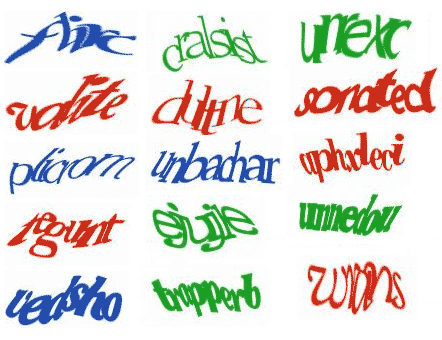
- Text-based CAPTCHAs: Distorted letters and numbers that users must type correctly. These are the oldest forms and relatively easy to defeat with OCR technology.
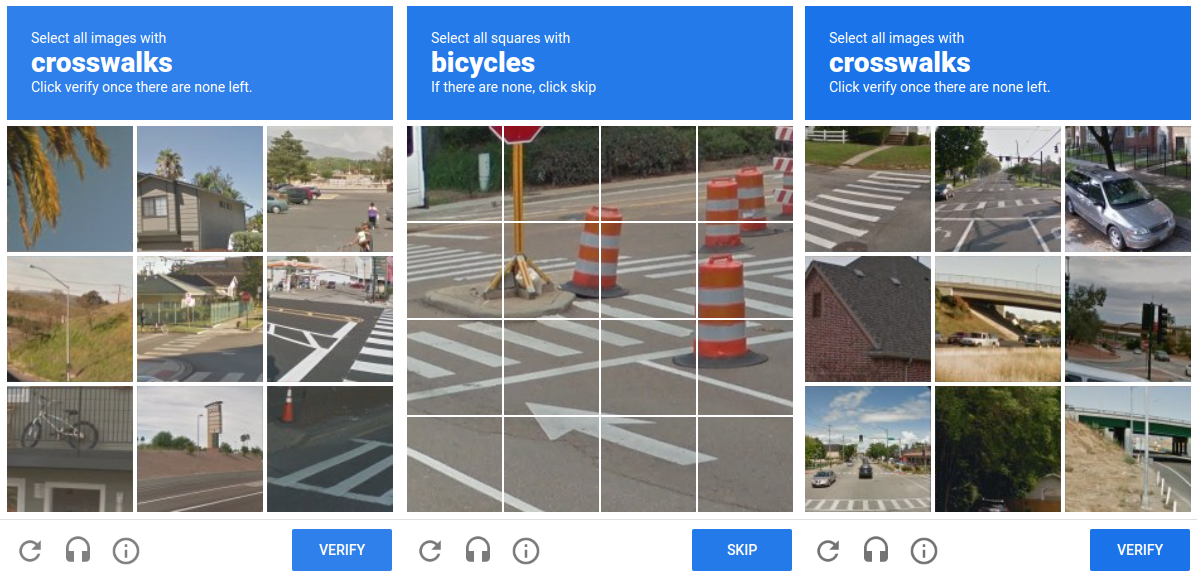
- Image recognition CAPTCHAs (reCAPTCHA v2): Tasks like "Select all images with traffic lights" or "Click each square containing a bicycle." These require visual interpretation.
- Invisible CAPTCHAs (reCAPTCHA v3): Background analysis of user behavior, mouse movements, and device fingerprints without explicit challenges. These assign a risk score based on how "human-like" the interaction appears.
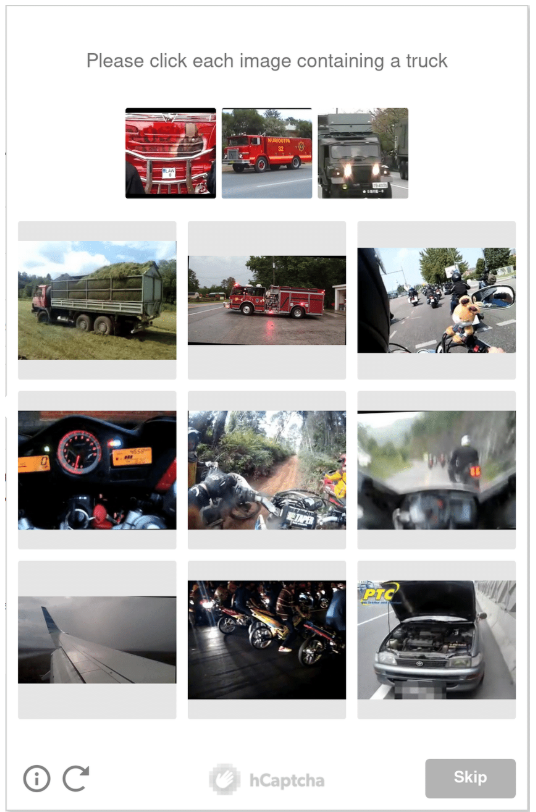
- hCaptcha: Similar to reCAPTCHA v2 but often considered more privacy-focused, used by companies seeking alternatives to Google's solution.
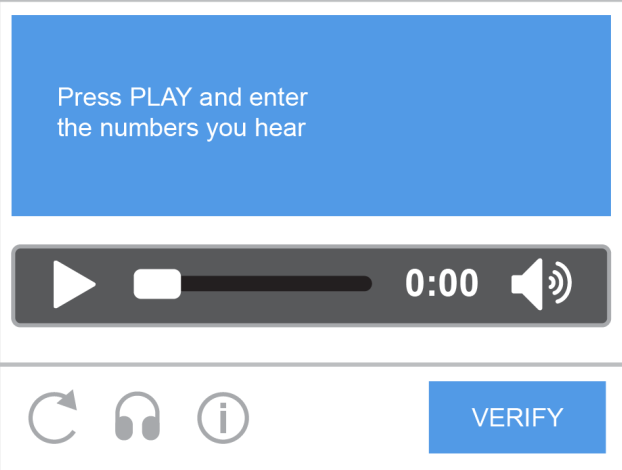
- Audio CAPTCHAs: Accessibility alternatives that present distorted audio challenges, though these are increasingly rare.
How CAPTCHAs Detect Bots
Modern CAPTCHA systems use sophisticated detection methods that go far beyond simple puzzle-solving:
- Behavioral analysis: Mouse movement patterns, click timing, scrolling behavior, and keyboard dynamics
- Device fingerprinting: Browser properties, installed fonts, screen resolution, WebGL capabilities, and canvas fingerprinting
- IP reputation: Tracking IP addresses associated with bot activity or datacenter ranges
- Browser automation detection: Identifying telltale signs of Selenium, Puppeteer, or other automation frameworks
- Machine learning models: Pattern recognition trained on millions of bot vs. human interactions
Key Insight: The evolution from simple text CAPTCHAs to invisible behavioral analysis represents a fundamental shift. Modern CAPTCHA systems don't just test whether you can solve a puzzle—they analyze whether you behave like a human throughout your entire session.
Traditional CAPTCHA Bypass Methods and Their Limitations
Before diving into modern solutions, it's important to understand why traditional CAPTCHA bypasser approaches struggle with today's sophisticated security systems.
Method 1: Manual Solving Services
How it works: Services like 2Captcha and Anti-Captcha employ human workers who solve CAPTCHAs in real-time for a fee, typically charging $1-3 per 1,000 CAPTCHAs solved.
Limitations:
- Slow response times (15-60 seconds per CAPTCHA)
- Costs accumulate rapidly at scale
- Ethical concerns about labor practices
- Not suitable for time-sensitive automation
- Still requires integration code and error handling
Method 2: OCR and Image Recognition
How it works: Optical Character Recognition (OCR) software attempts to read distorted text or identify objects in images using computer vision algorithms.
Limitations:
- Success rates below 30% on modern CAPTCHAs
- Ineffective against reCAPTCHA v3 and invisible CAPTCHAs
- Requires constant updates as CAPTCHA designs evolve
- Only works on legacy text-based CAPTCHAs
- Easily defeated by improved distortion techniques
Method 3: Headless Browser Techniques
How it works: Using tools like Selenium or Puppeteer to automate browsers while attempting to mimic human behavior through scripted actions like random delays and mouse movements.
Limitations:
- Modern CAPTCHAs easily detect automation frameworks through JavaScript properties
- Browser fingerprinting reveals headless mode indicators
- Requires extensive coding expertise to maintain
- Scripts break frequently as detection methods improve
- High development and maintenance overhead
- Success rates continue declining as CAPTCHA systems learn
Detection Example: Headless Chrome can be detected through over 30 different properties, including navigator.webdriver, missing browser plugins, unusual WebGL rendering, and inconsistent screen dimensions. Simply adding random delays doesn't make your bot appear human.
Method 4: Rotating Proxies and Residential IPs
How it works: Distributing requests across multiple IP addresses, particularly residential IPs that appear to come from real users rather than data centers.
Limitations:
- Addresses only IP-based blocking, not behavioral detection
- Expensive, with residential proxies costing $5-15 per GB
- Must be combined with other bypass methods
- Doesn't solve CAPTCHA challenges themselves
- Quality proxies are increasingly difficult to obtain
The Core Problem with Traditional Approaches
All these methods share a fundamental flaw: they treat CAPTCHA bypass as a technical puzzle to solve rather than a behavioral challenge to overcome. Modern CAPTCHA systems like reCAPTCHA v3 don't just look at whether you can solve the puzzle—they analyze your entire browsing session for human-like patterns.
Method | Success Rate | Cost | Maintenance | Scalability |
Manual Solving | 90%+ | High | Low | Poor |
OCR/Image Recognition | 20-30% | Low | Very High | Moderate |
Headless Browsers | 40-60% | Medium | Very High | Moderate |
Rotating Proxies | N/A* | High | Medium | Good |
*Proxies don't bypass CAPTCHAs themselves, only complement other methods
This is why the industry is shifting toward AI-powered solutions that don't just bypass CAPTCHA—they interact with websites in genuinely human-like ways that avoid triggering security systems in the first place.
The Ultimate Solution: AI-Powered Browser Automation with BrowserAct
The limitations of traditional CAPTCHA bypassers have led to a paradigm shift: instead of trying to defeat CAPTCHA systems, modern solutions focus on behaving so naturally that they never trigger security challenges in the first place. This is where BrowserAct revolutionizes the entire approach to how to bypass CAPTCHA human verification.
 Why Traditional CAPTCHA Bypassers Are Obsolete
Modern CAPTCHA systems have evolved beyond simple puzzle-solving. They use sophisticated behavioral analysis and machine learning to detect bot patterns. Traditional bypass methods fail because they:
- Focus on solving challenges rather than avoiding them
- Use scripted, predictable behavior patterns
- Require constant maintenance as detection improves
- Generate unnatural browsing signatures
- Struggle with invisible CAPTCHAs that analyze behavior continuously
BrowserAct takes a fundamentally different approach as a browser automation and web scraping tool powered by AI that generates genuine human-like behavior.
BrowserAct: Key Features for Effortless CAPTCHA Bypass
BrowserAct is an intelligent browser automation and scraping platform designed to handle even the most sophisticated CAPTCHA systems automatically. Here are its core capabilities:
🤖 Natural Language AI Browser Automation
Turn ideas into scraping workflows with simple prompts. Create powerful browser automations without code or maintenance. Our AI handles the technical details, so you can focus on the results.
⚡ Human-Like Interaction
Intelligently bypasses CAPTCHAs and verification automatically. Natural mouse movements, realistic timing, and organic browsing behavior mean security systems rarely flag your automations as bots.
🌍 Global Residential IP Coverage
Effortlessly bypass geo-restrictions from anywhere. Built-in residential proxy rotation maintains high IP reputation scores without requiring separate services or manual configuration.
✨ Crystal-Clear Data
Automatically removes ads and irrelevant content for clean, usable results. Extract exactly the data you need in a structured format ready for analysis.
☁️ Always-On Cloud
Your automations run 24/7, with no need to worry about servers or downtime. Get reliable, hands-off automation while you sleep—no infrastructure management required.
🔗 Seamless Business Integration
Instant integration with n8n, Make, and any systems via API. Plus, MCP standard support delivers a unified protocol for reusable AI workflows across every platform.
Uninterrupted Task Execution You Can Trust
BrowserAct provides fast, clean, and stable data. Your scraping workflows run seamlessly with zero downtime, zero interruptions, and maximum reliability:
- 95%+ CAPTCHA success rate across all major types (reCAPTCHA v2/v3, hCaptcha, custom challenges)
- Zero maintenance — AI adapts automatically when websites update their layouts or security
- Enterprise-grade reliability with redundant infrastructure and intelligent error handling
- Automatic scaling to handle spikes in data collection needs
Real-World Use Cases: BrowserAct in Action
Use Case | Challenge | BrowserAct Solution |
E-commerce Price Monitoring | Competitor websites protect pricing data with CAPTCHAs | Automated daily scraping with human-like browsing patterns, zero CAPTCHA blocks |
Lead Generation | Directory sites require CAPTCHA for data access | Natural browsing automation that bypasses verification seamlessly |
Market Research | Data sources across multiple geo-restricted regions | Global residential IPs with intelligent CAPTCHA handling extract data from any region |
Product Catalog Scraping | Large-scale data extraction triggers rate limits and CAPTCHAs | Smart throttling and human-like patterns enable reliable high-volume scraping |
BrowserAct vs. Traditional CAPTCHA Bypass Methods
Feature | Traditional Bypassers | BrowserAct |
CAPTCHA Success Rate | 60-70% | 95%+ |
Setup Complexity | Expert coding required | Natural language prompts |
Maintenance Required | High (constant updates) | None (AI adapts automatically) |
Proxy Management | Separate service + integration | Built-in residential IPs |
Infrastructure | Self-hosted or cloud setup | Fully managed 24/7 cloud |
Works with Invisible CAPTCHAs | No (behavioral detection) | Yes (genuine human behavior) |
Integration Options | Limited APIs | n8n, Make, MCP, custom APIs |
Cost at Scale | $200-500+/month | Cost-effective all-in-one |
Why BrowserAct Wins: Traditional methods require you to assemble multiple services (manual solving, proxies, hosting, maintenance). BrowserAct combines everything into one intelligent platform that handles CAPTCHA bypass automatically while you describe scraping tasks in plain English.
Getting Started with BrowserAct
Ready to experience effortless CAPTCHA bypass with AI-powered browser automation? Here's how to get started:
- Sign up for free at browseract.com — no credit card required
- Create the workflow with natural language — Use our visual drag-and-drop workflow builder with nodes like visit, input, loop, scroll, and extract. Each node is powered by natural language, so you simply describe what you want in plain English
- Deploy to the cloud and watch BrowserAct handle CAPTCHAs automatically
- Integrate your data into your systems via n8n, Make, or API
Within minutes, you'll have a robust scraping workflow running 24/7 that bypasses CAPTCHA challenges seamlessly—no coding, no maintenance, no headaches.
Stop Fighting CAPTCHAs. Start Automating Intelligently.
Join thousands of businesses using BrowserAct to extract data reliably without CAPTCHA interruptions
Conclusion: The Future of CAPTCHA Bypass
The evolution of CAPTCHA technology has made traditional bypass methods increasingly ineffective and expensive. From manual solving services to headless browser hacks, every conventional approach struggles with modern security systems that analyze behavior rather than just puzzle-solving ability.
The key insight is that bypassing CAPTCHA in 2026 isn't about defeating security systems—it's about behaving naturally enough that security systems never flag you in the first place. This requires genuine human-like interaction patterns, proper browser fingerprinting, residential IP management, and adaptive behavior that can't be achieved through simple scripts.
BrowserAct represents the next generation of browser automation by combining AI-powered natural language control with built-in CAPTCHA handling, residential proxies, and genuine human-like behavior. Instead of maintaining complex captcha bypasser scripts that break constantly, you describe what you need in plain English and let the AI handle everything—including navigating through security challenges seamlessly.
Key advantages of the BrowserAct approach:
- 95%+ success rate on all CAPTCHA types including invisible reCAPTCHA v3
- Zero maintenance—AI adapts as websites and security systems evolve
- No coding required—natural language automation accessible to everyone
- All-in-one solution—built-in proxies, cloud infrastructure, and integrations
- Scales effortlessly from small projects to enterprise deployments
Whether you're scraping competitor data, automating lead generation, conducting market research, or running continuous testing, intelligent browser automation eliminates the CAPTCHA bottleneck that has plagued traditional approaches.
Ready to bypass CAPTCHA effortlessly? Start your free trial with BrowserAct and experience intelligent automation that just works.
Frequently Asked Questions
What is the most effective way to bypass CAPTCHA in 2026?
The most effective way to bypass CAPTCHA is using AI-powered browser automation that generates genuinely human-like behavior patterns. Solutions like BrowserAct achieve 95%+ success rates by interacting with websites naturally rather than trying to solve CAPTCHA challenges through technical exploits. Traditional methods like manual solving services or OCR have become obsolete as CAPTCHA systems now analyze entire browsing sessions rather than just puzzle-solving ability.
How does BrowserAct bypass CAPTCHA human verification?
BrowserAct bypasses CAPTCHA human verification by behaving like a genuine human user. Its AI generates natural mouse movements, realistic timing patterns, organic scrolling behavior, and varied interaction sequences that modern CAPTCHA systems cannot distinguish from real users. Combined with residential IP rotation and proper browser fingerprinting, BrowserAct rarely triggers CAPTCHA challenges in the first place. When verification does appear, the intelligent system handles it automatically without interrupting your workflow.
Why do traditional CAPTCHA bypasser tools fail on modern CAPTCHAs?
Traditional captcha bypasser tools fail because modern CAPTCHAs like reCAPTCHA v3 analyze behavioral patterns rather than just testing puzzle-solving ability. These systems use machine learning to detect scripted behavior, headless browser signatures, unnatural timing patterns, and suspicious browser fingerprints. Traditional methods like Selenium scripts, proxy rotation alone, or OCR cannot replicate the subtle nuances of human behavior that invisible CAPTCHAs monitor continuously throughout browsing sessions.
Is it legal to bypass CAPTCHA for web scraping?
The legality of bypassing CAPTCHA depends on your specific use case, jurisdiction, and the website's terms of service. Bypassing CAPTCHA for legitimate business purposes like price monitoring, market research, or data analysis is generally legal when you have rights to access the information. However, you should always review the target website's terms of service and robots.txt file, respect rate limits, and ensure your use case complies with local laws. BrowserAct enables responsible automation that respects website resources while accomplishing legitimate business objectives.
What's the difference between reCAPTCHA v2 and reCAPTCHA v3?
reCAPTCHA v2 presents explicit challenges like image selection puzzles ("Select all traffic lights") that users must solve to proceed. reCAPTCHA v3, on the other hand, is invisible and runs in the background, analyzing user behavior throughout the session to assign a risk score without interrupting the user experience. v3 monitors mouse movements, click patterns, typing rhythms, and browser characteristics to detect bot-like behavior. This makes v3 much harder to bypass with traditional methods, which is why human-like automation tools like BrowserAct that generate genuine behavioral patterns are essential for modern CAPTCHA handling.

Relative Resources

BrowserAct Local Browser Skill Is Here: Control Your Real Chrome with AI Agents

Web Scraping API vs DIY: How to Choose the Right One in 2026

BrowserAct Creator Program — Phase 1 Featured Workflows & Rewards

How to Choose a Reliable Web Scraper for Massive Requests
Latest Resources

Is Twitter / X Scraping Legal or Safe?

Twitter Scraper Troubleshooting: 429, Login Wall, Empty Results

Twitter Data for Sentiment Analysis and AI Workflows
